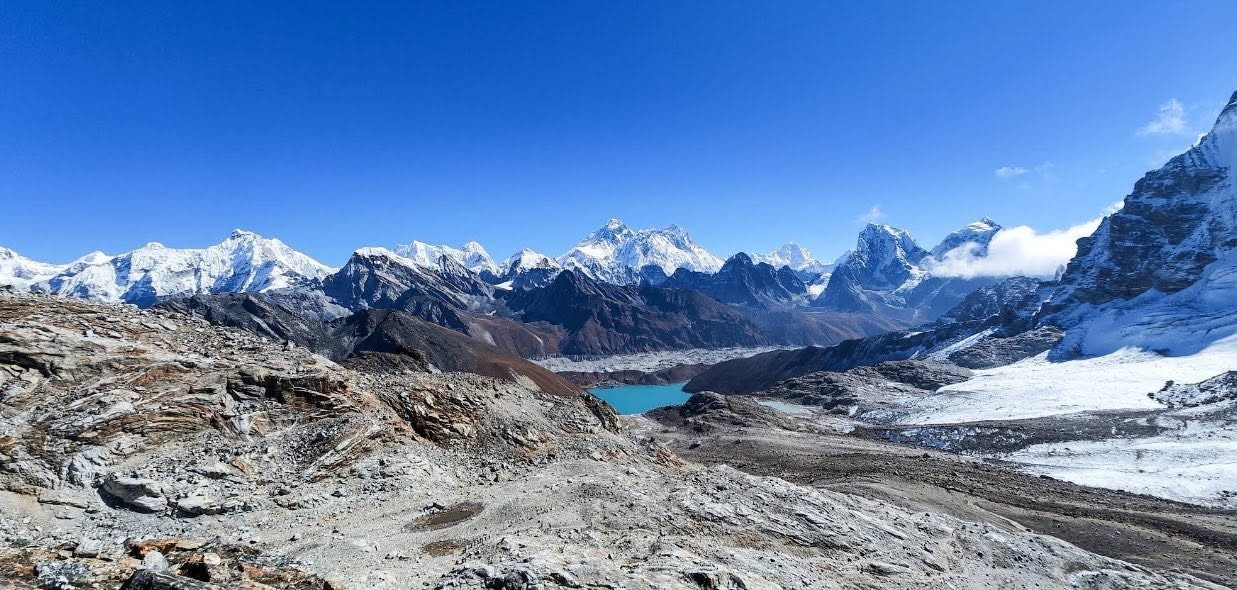
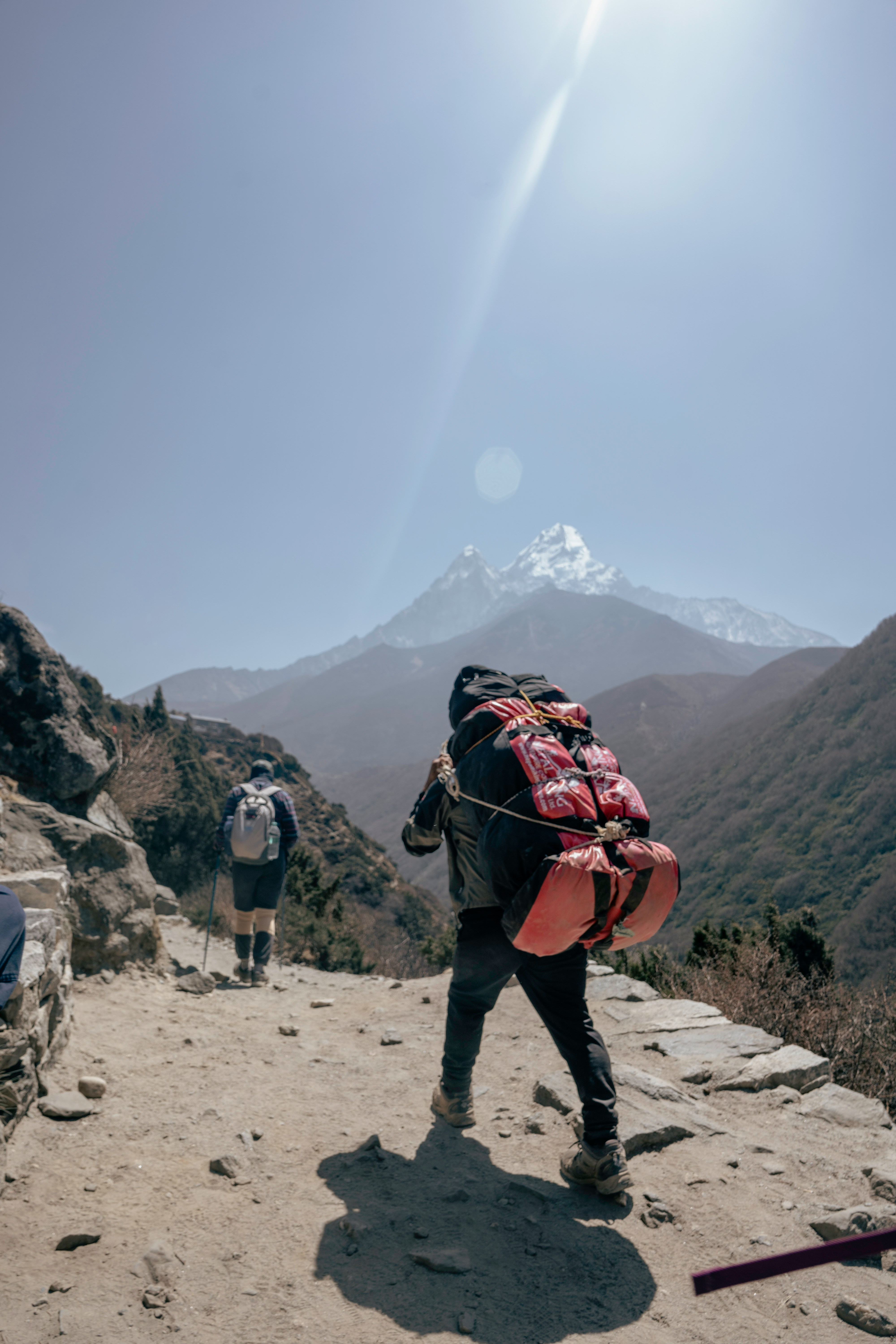
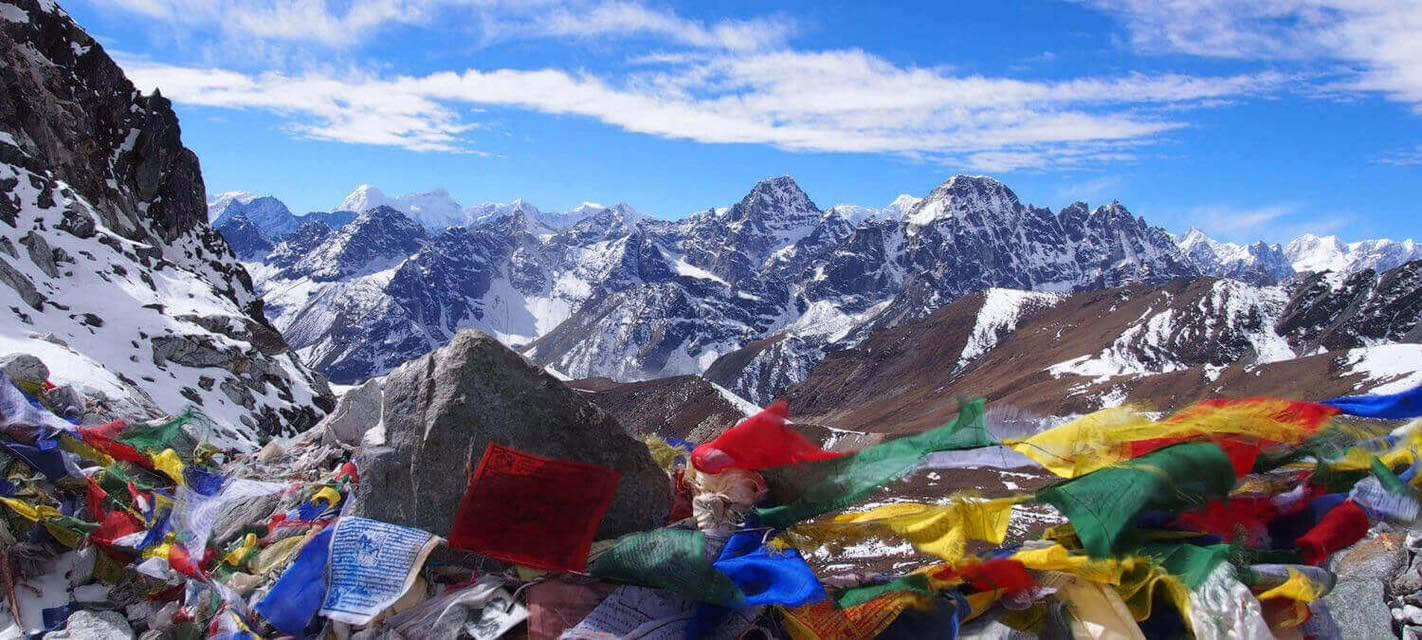
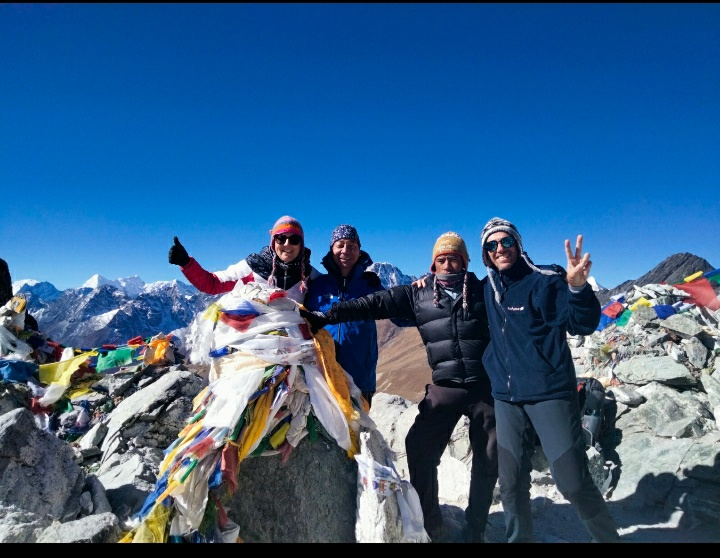
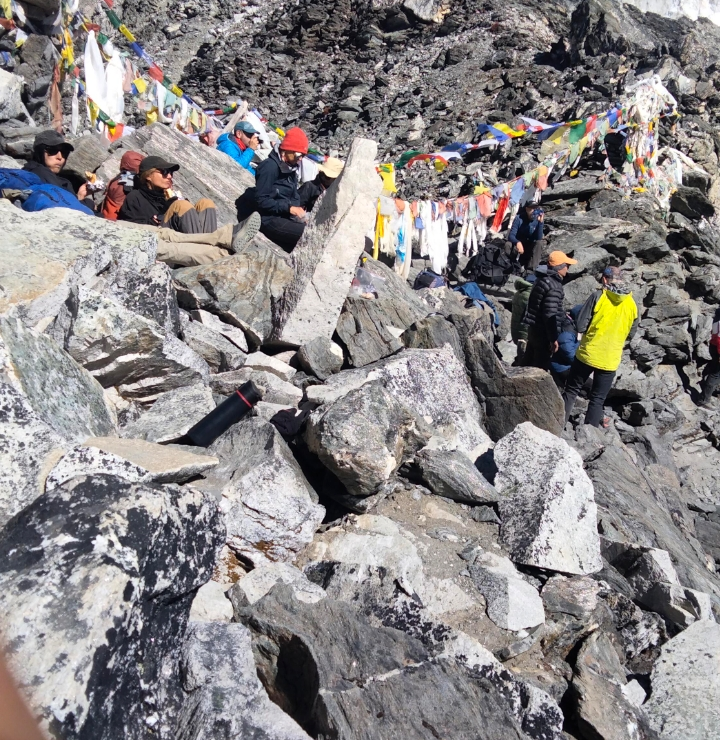
The Everest Three Pass Trek is a challenging and adventurous trek that includes some of the highest and most beautiful mountain passes in the world. In the majestic Nepalese Himalayas, this trek offers a unique exploration of Everest, and keen travelers take three high mountain passes: Renzo La, Cho La, and Kongma La.
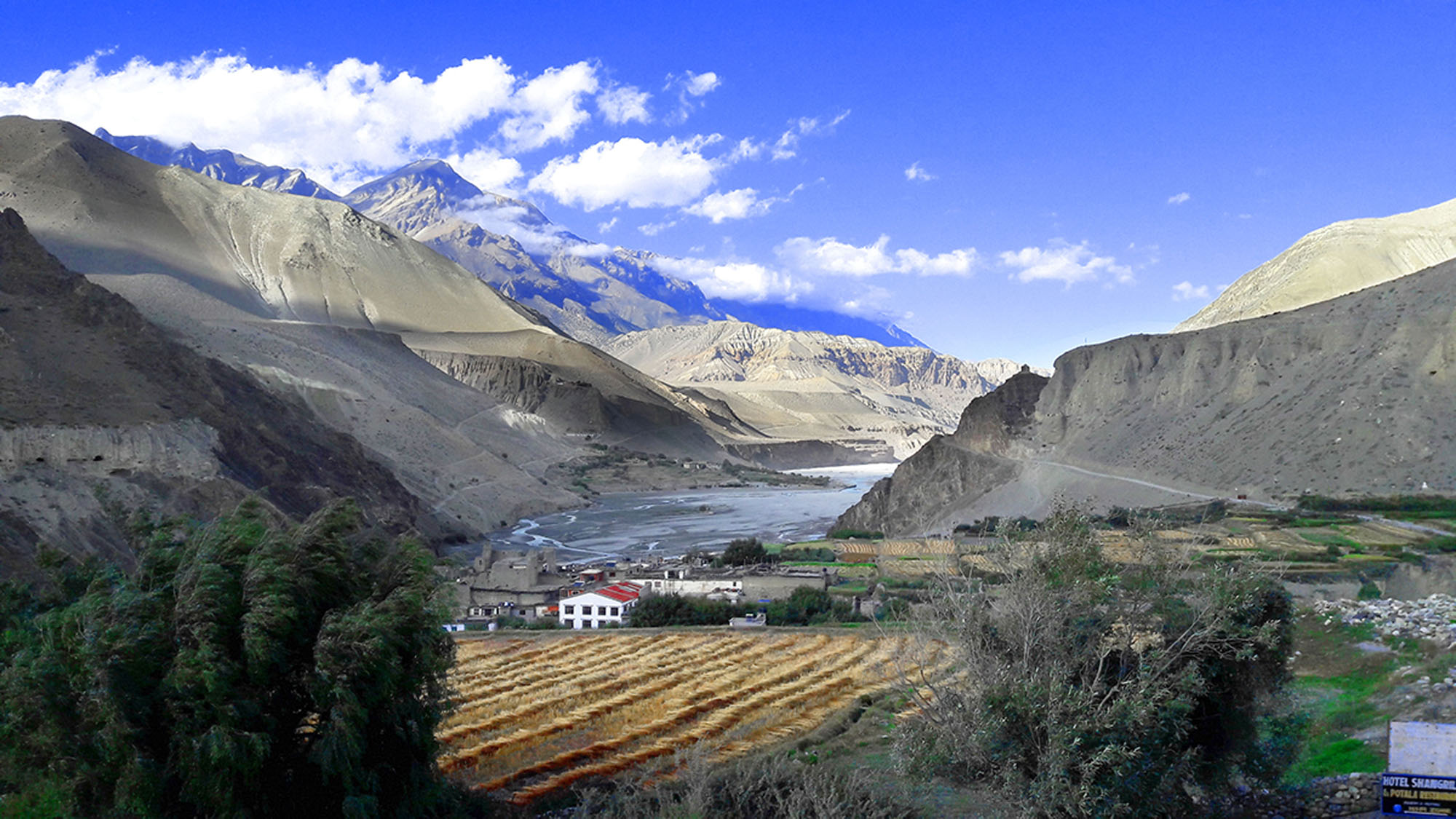
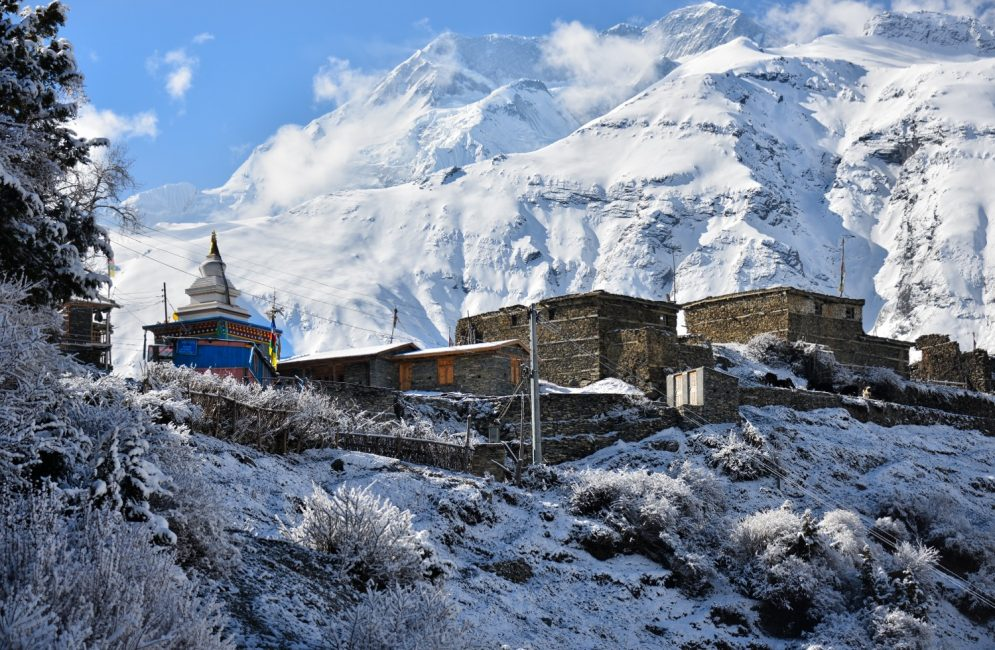
Likewise, each pass presents a unique and demanding climb and reveals breathtaking images of snow-capped mountains, scenic valleys, and quaint Sherpa villages.
Moreover, the trek is not only a test of physical endurance but also a rewarding activity in the heart of the Khumbu region. It allows you to immerse yourself more in the local culture and forge a deeper connection with the Himalayan landscape.
If you have any questions about your trip, travel dates, or itinerary, feel free to call or email us.
If you’d like to choose your own date, please fill out the enquiry form.
If you’d like to choose your own date, please fill out the enquiry form below.
Arrive at Kathmandu, the capital city of Nepal. where our representative will receive you. Upon your arrival you will be provided with a comfortable hotel room as per our service.
You begin the trek with an exhilarating flight from Kathmandu to Lukla, a small mountain airstrip.
The trek commences with a descent towards Phakding, passing through picturesque landscapes, small villages, and alongside the Dudh Koshi River.
This day’s trek takes you from Phakding to Namche Bazaar. The trail weaves through lush forests, crossing suspension bridges adorned with prayer flags.
As you ascend, the Dudh Koshi River accompanies the journey. Upon reaching Namche Bazaar, you’re welcomed by stunning views of Everest and the surrounding peaks.
Today is dedicated to acclimatization, which is crucial for a successful trek. You can explore Namche Bazaar, visit the Sherpa Culture Museum, or hike to higher elevations like Everest View Hotel for panoramic views. It aids in adjusting to the altitude and prepares you for the following trek.
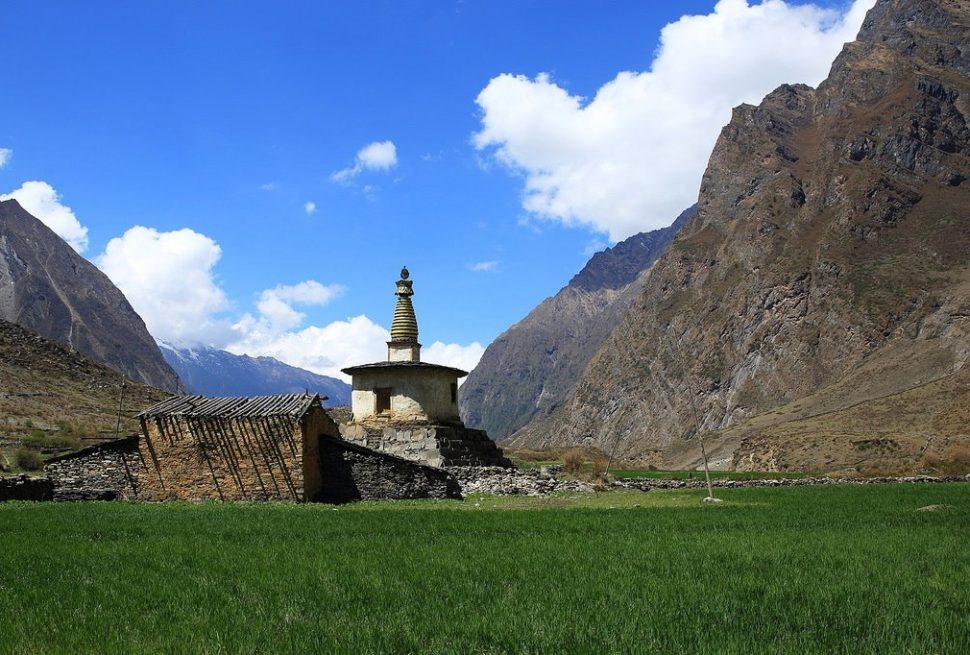
The trail leads to Thame, a picturesque village known for its Sherpa culture and stunning vistas. You’ll walk through rhododendron forests and cross suspension bridges over the Bhote Koshi River. Thame, situated at 3,750 meters, provides a glimpse into the traditional Sherpa way of life.
This day’s trek involves a journey from Thame to Lungden. The trail takes you through rocky paths and alpine terrain, with occasional glimpses of the mighty Himalayas. As you ascend, you’ll notice the change in landscapes and the increasing altitude, making your way to the peaceful village of Lungden.
Today is a delightful day as it presents an exhilarating and demanding trek from Lungden to Gokyo Lake via Renjo La Pass.
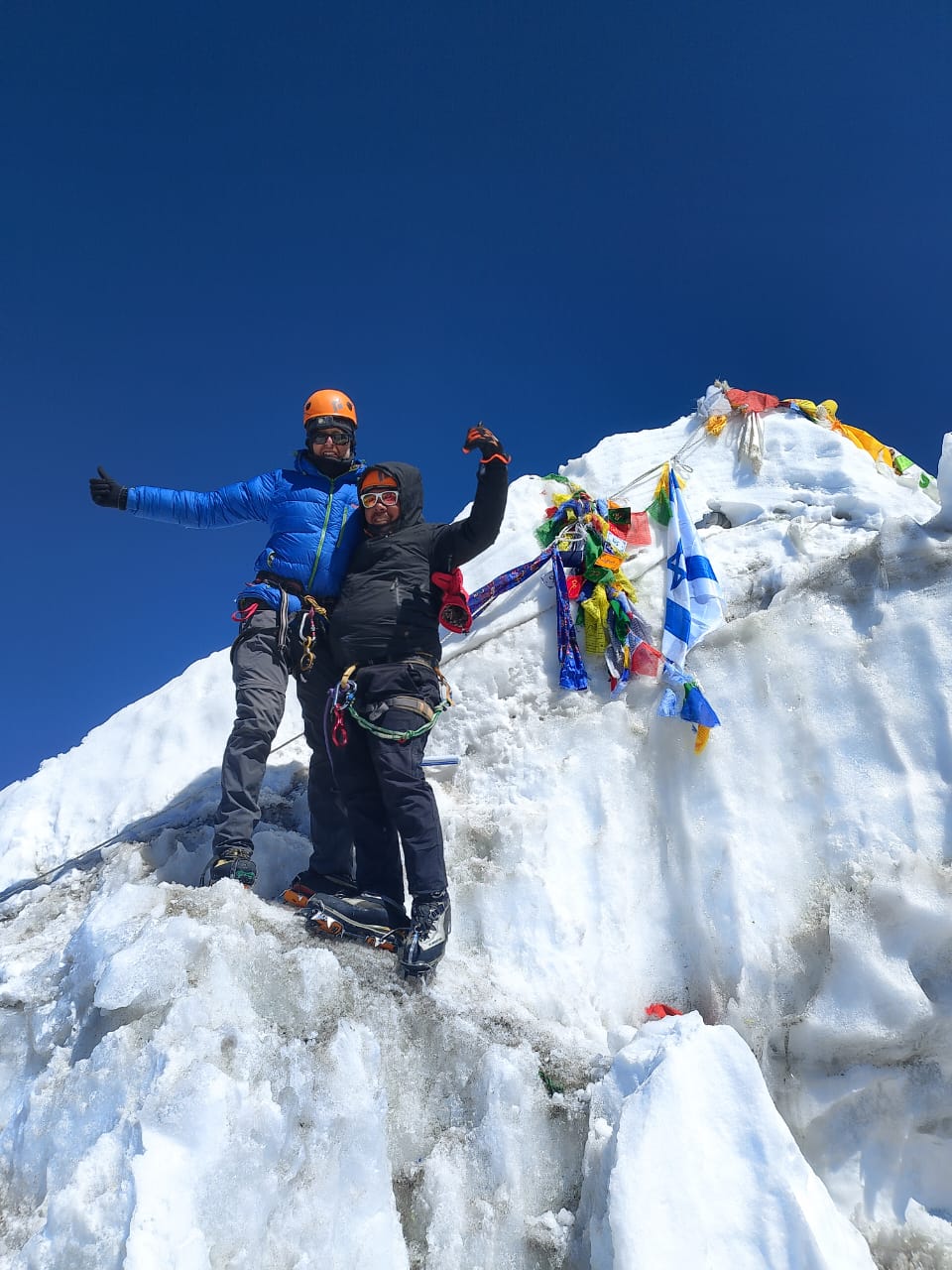
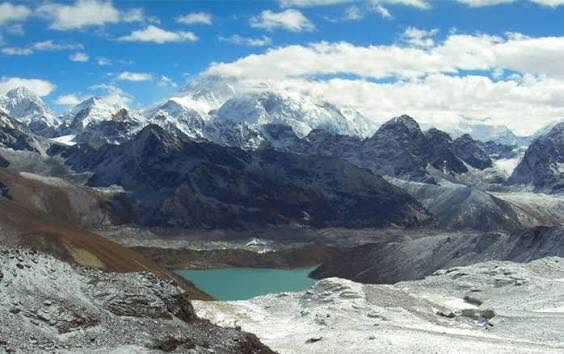
The ascent to Renjo La Pass at 5,360 meters offers a daunting challenge, rewarded by awe-inspiring panoramic views of Everest, Makalu, and more.
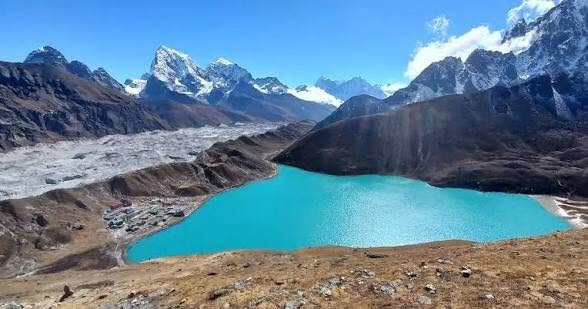
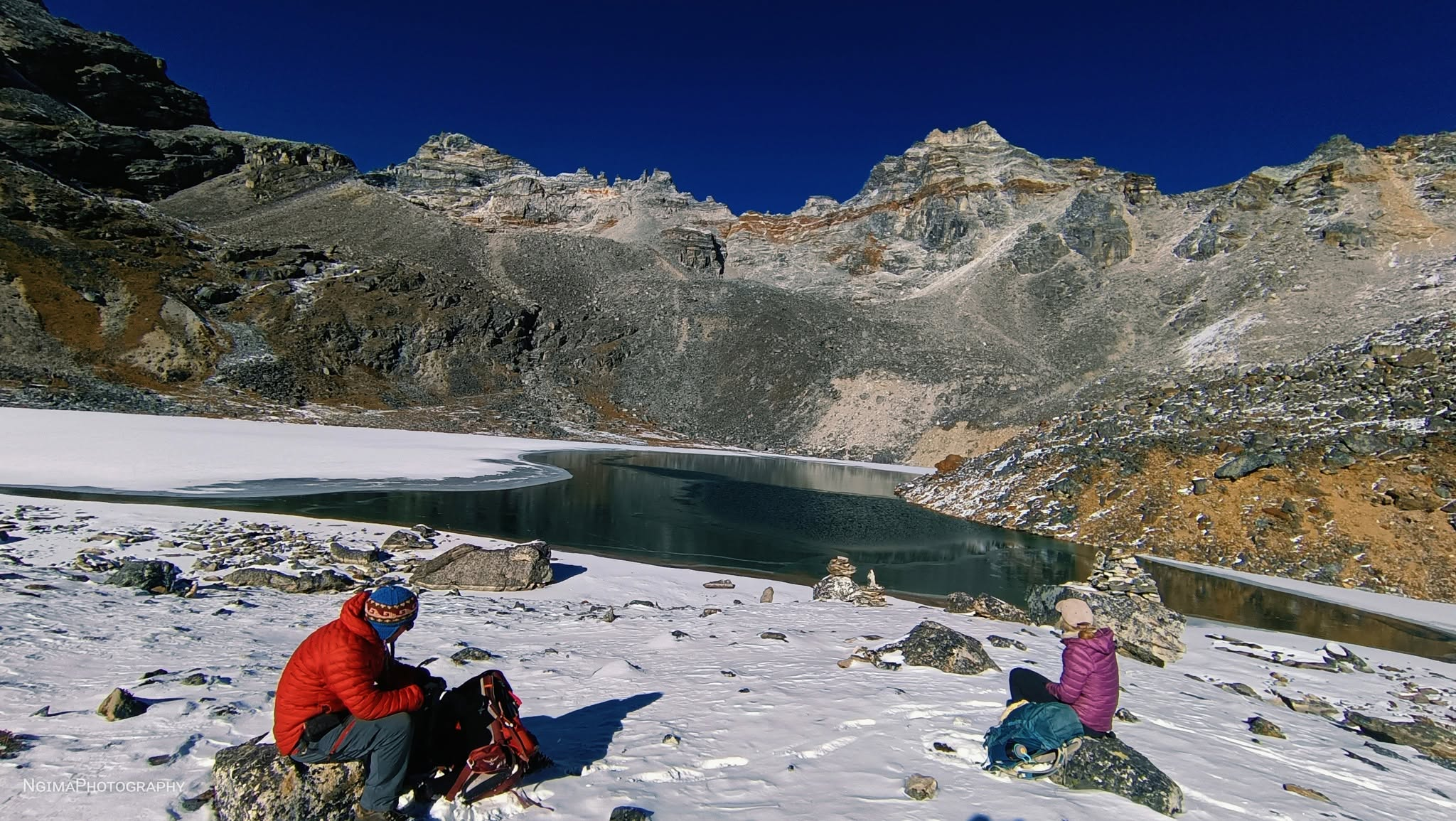
Descending through rocky terrain, the trail leads to the captivating Gokyo Lake at 4,750 meters.
Its tranquil waters mirror the towering peaks, creating a surreal backdrop. This adventurous day epitomizes the grandeur of the Himalayas and the thrill of conquering high-altitude paths.
You are dedicated to acclimatization in Gokyo, beginning with an exhilarating early morning hike to Gokyo Ri.
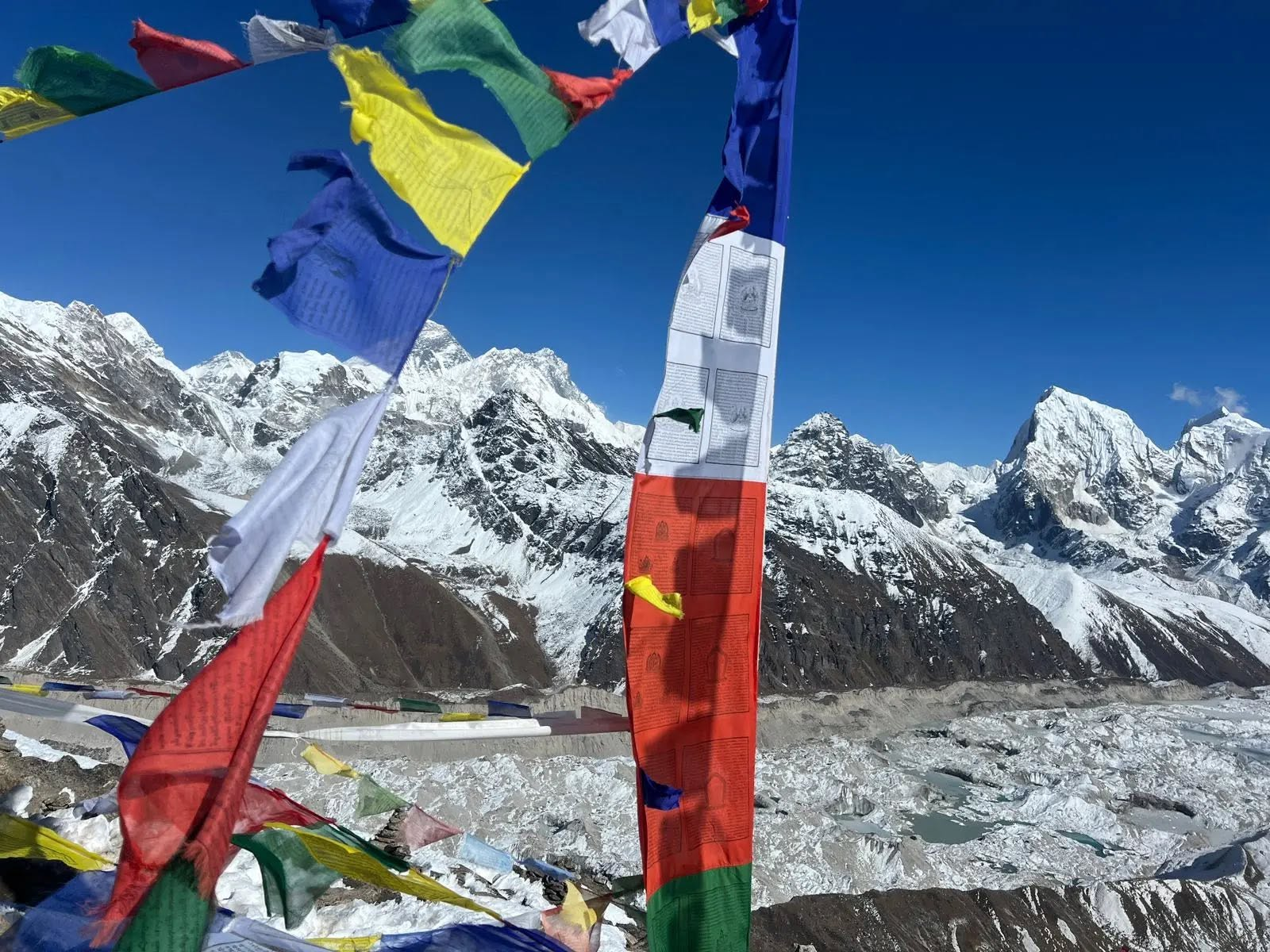
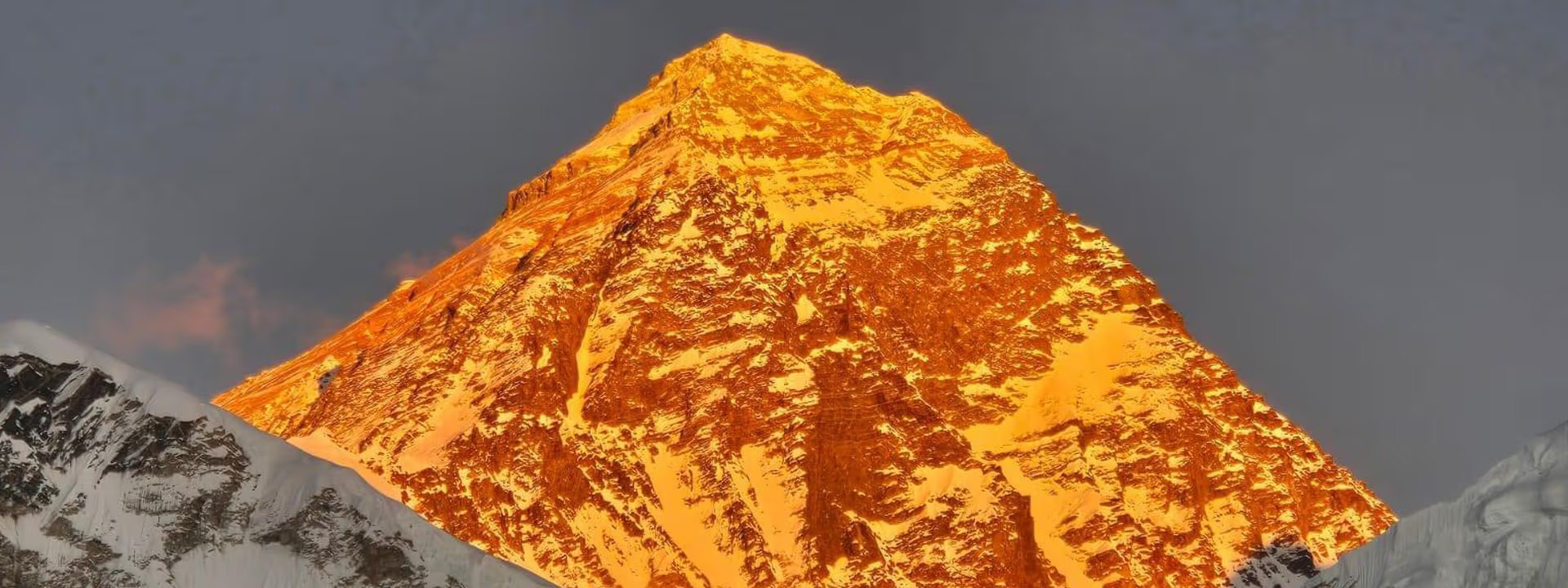
At an altitude of 5,357 meters, Gokyo Ri stands as a breathtaking viewpoint. The trek uphill is rewarded with a mesmerizing sunrise, painting the sky with hues of orange and pink while revealing the panoramic grandeur of the Everest region.
From this vantage point, trekkers are enchanted by the majestic peaks, including Everest, Lhotse, Makalu, and Cho Oyu, creating an unforgettable Himalayan experience.
You get to observe a picturesque trek from Gokyo, situated at 4,750 meters, to Thangnak, at 4,700 meters.
The trail is in the Himalayan landscape, showcasing towering peaks and the Ngozumpa Glacier.
The journey is relatively short, allowing for a leisurely walk while providing ample time to absorb the awe-inspiring beauty of the region.
Thangnak is nestled amidst the grandeur of the mountains. It offers a tranquil haven and sets the stage for the next leg of this unforgettable Himalayan adventure.
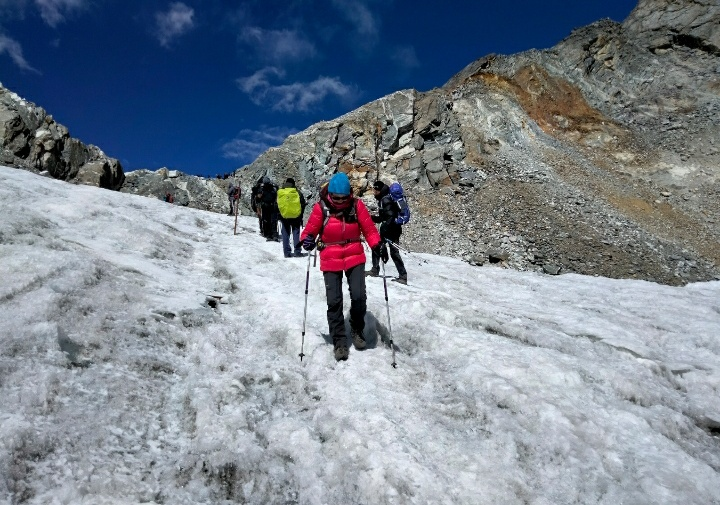
Today entails a thrilling trek from Thangnak to Dzongla, navigating the challenging Cho La Pass at 5,420 meters. The ascent to the pass is demanding, rewarding trekkers with breathtaking vistas of pristine glaciers and towering peaks.
The descent towards Dzongla is equally exhilarating, showcasing a diverse Himalayan landscape.
Amidst the high-altitude adventure, you find yourself amidst a captivating alpine environment, leaving an indelible mark on the Everest Base Camp trekking experience.
On this day, the trek unfolds from Dzongla to Lobuche. The trail is challenging, weaving through rocky paths and high-altitude terrain.
Amidst the rugged beauty, trekkers are rewarded with awe-inspiring views of iconic Himalayan peaks. The ascent culminates at Lobuche, a small settlement nestled in the mountains.
At 4,940 meters, the air is crisp, and the scenery is nothing short of majestic, setting the stage for the final leg of the journey to Everest Base Camp.
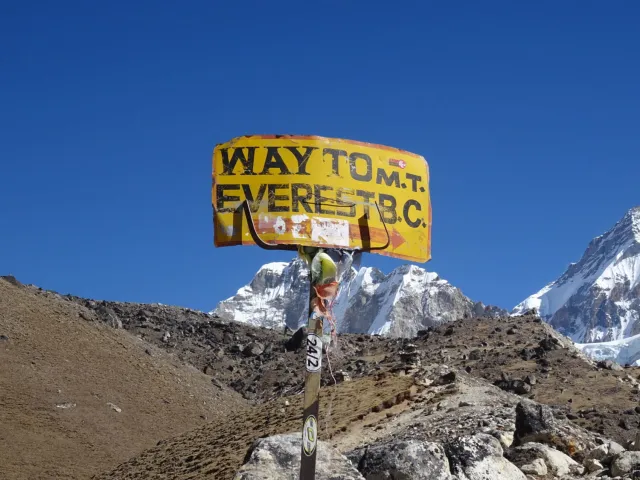
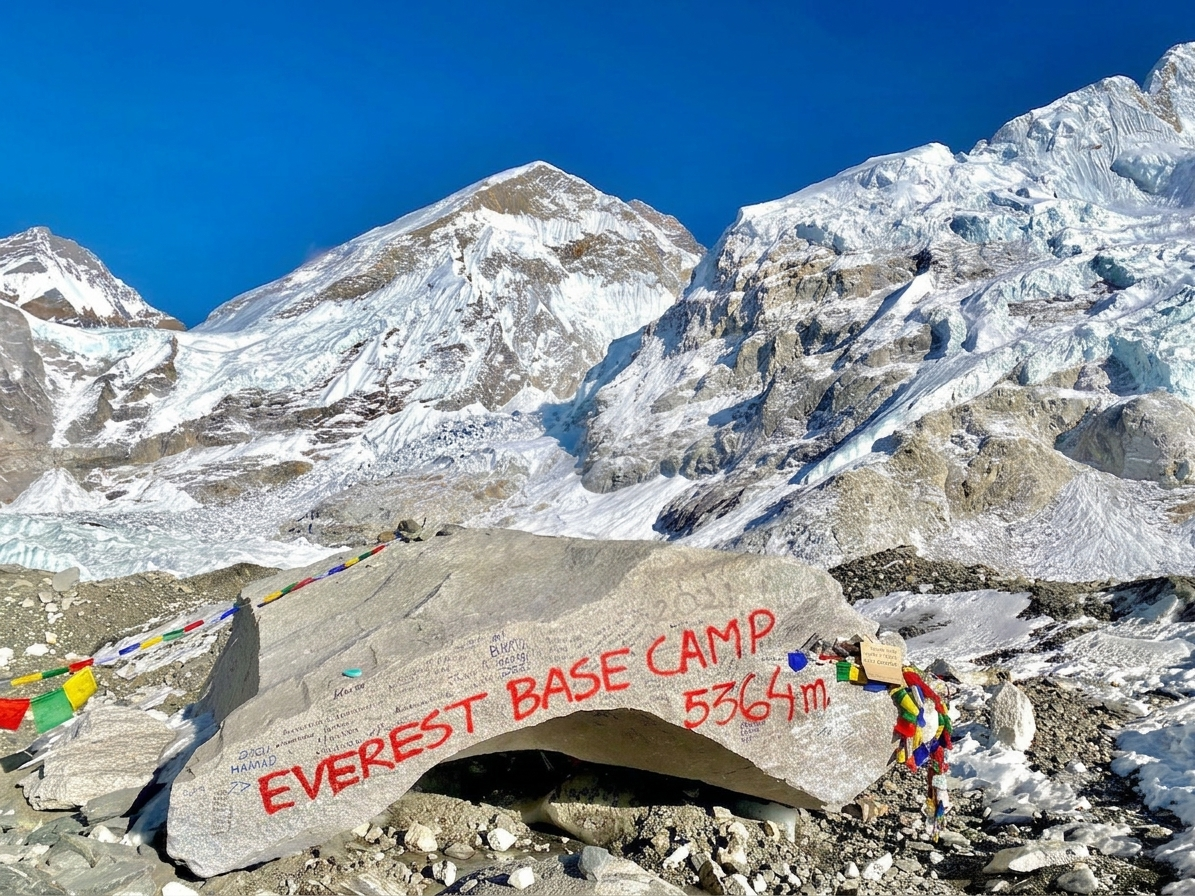
A challenging yet rewarding day begins with a trek from Lobuche (4,940m) to the iconic Everest Base Camp (5,364m). The trail traces a glacial terrain, offering mesmerizing views of Khumbu Icefall and surrounding peaks.
Upon reaching Everest Base Camp, trekkers stand at the foot of the world’s highest peak. After soaking in the moment, they return to Gorak Shep (5,164m), surrounded by a surreal, icy wilderness.
This trek provides an unforgettable Everest experience, a pinnacle achievement in the heart of the Himalayas.
You are presented with a challenging yet rewarding hike to Kala Patthar, a pinnacle vantage point standing at 5,550 meters.
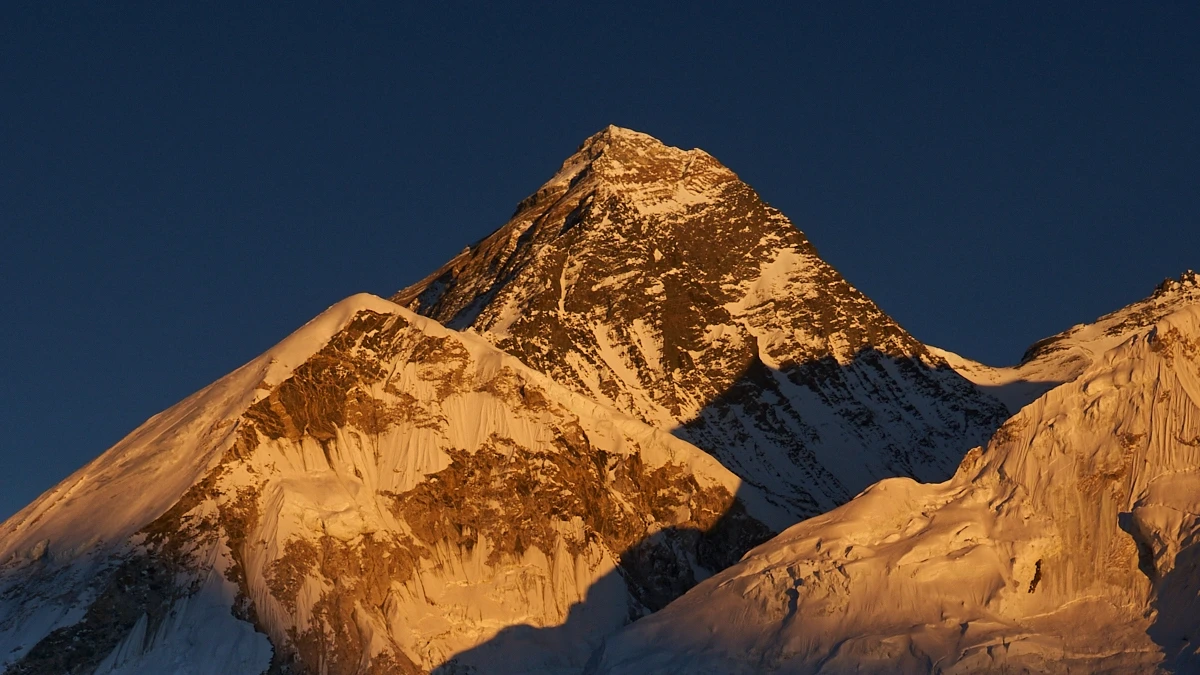
Trekkers are bestowed with unmatched panoramic views of Everest and neighboring peaks.
After this awe-inspiring experience, the trek continues to Lobuche at 4,940 meters, a picturesque village tucked amidst the majestic Himalayan landscape.
This day encapsulates both the triumph of reaching Kala Patthar and the continued adventure toward the Everest Base Camp, promising an unforgettable Himalayan odyssey.
You have to take the challenge up for the trek from Lobuche (4,940m) to Chukhung (4,730m) via Kongma La Pass (5,540m).
This demanding journey involves ascending the towering Kongma La Pass, a highlight of the trek, offering breathtaking panoramic views of the surrounding peaks and glaciers.
The descent to Chukhung rewards trekkers with a change in scenery as they arrive at the tranquil village, nestled in the shadow of towering mountains, preparing for the adventures yet to come.
The journey descends from Chukhung, perched at 4,730 meters, to the tranquil village of Tengboche at 3,860 meters.
The trek encompasses a mix of rugged terrains and lush landscapes. As you descend, the Himalayan panorama transforms, granting awe-inspiring views of iconic peaks. Tengboche, known for its sacred monastery and serene ambiance, welcomes trekkers.
The day’s trek is a harmonious blend of natural beauty and cultural richness, offering a glimpse into the spiritual heart of the Khumbu region.
The trek from Tengboche to Namche Bazaar is a captivating descent through the alpine terrain.
Starting from the picturesque Tengboche, nestled at 3,860 meters, the trail leads downhill, winding through lush rhododendron forests and charming villages.
The views of Everest and neighboring peaks provide a breathtaking backdrop. As the altitude gradually decreases to 3,440 meters in Namche Bazaar, trekkers retrace their steps, experiencing a familiar yet ever-enchanting path.
The bustling town of Namche Bazaar welcomes you with its lively atmosphere and a sense of accomplishment in the journey thus far.
The journey on this day involves a downward trek from Namche Bazaar, the vibrant mountain town, to Lukla.
Descending through the undulating terrain, trekkers pass through forests and charming Sherpa villages.
The trail offers a mix of landscapes, from dense woods to open vistas, showcasing the Himalayan beauty.
As you approach Lukla, the familiarity of the initial stages of the trek contrasts with the sense of accomplishment, preparing trekkers for the flight back to Kathmandu and reflecting on the incredible trek to Everest Base Camp.
On this day, the Everest adventure culminates as trekkers board a scenic flight from Lukla to Kathmandu. The flight offers a final glimpse of the breathtaking Himalayan landscape, allowing reflection on the incredible journey.
Upon reaching Kathmandu, you can reminisce about the trek and perhaps indulge in some last-minute shopping or exploration of the city.
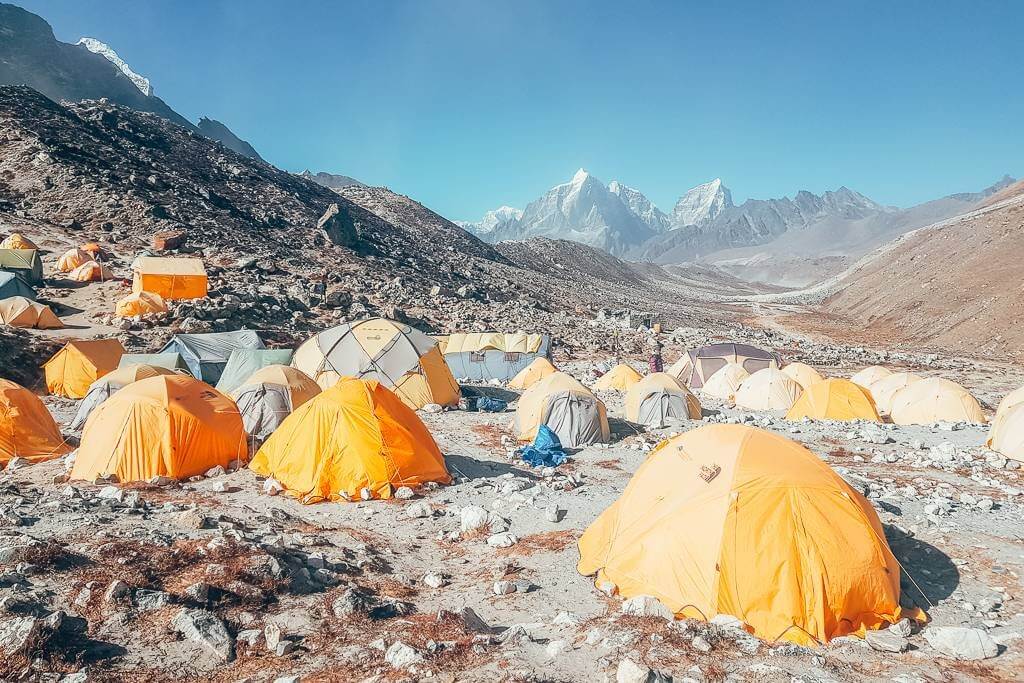
This tour includes a 3-star hotel in Kathmandu within walking distance of Thamel or near Boudhanath and tea house accommodation during the trek. Tea houses are basic but comfortable and provide a simple, authentic mountain experience with limited facilities in remote areas.
Nepal Visa Information
Most travelers require a visa to enter Nepal. You can obtain a tourist visa either before your trip through a Nepalese embassy or upon arrival at Tribhuvan International Airport in Kathmandu.
Visa on Arrival Fees
All tourist visas are issued as multiple-entry visas. Travelers holding European passports may also pay the equivalent amount in Euros (EUR) or British Pounds (GBP). Visa fees must be paid in cash upon arrival.
To obtain your visa, you will need:
After completing the application, pay the visa fee at the designated counter and then proceed to the immigration desk to receive your visa stamp. During peak travel seasons, processing lines can be lengthy, so we recommend completing the online visa application in advance whenever possible.
Important Notes
For the latest visa regulations and requirements, please consult the nearest Nepalese embassy or consulate before your departure.
Travelers coming to Nepal are not required to take any mandatory vaccinations. However, it is generally recommended that routine immunizations are kept current, including Tetanus, Diphtheria, Polio, Typhoid, and Hepatitis A, for better health protection during travel.
Malaria is not a widespread concern in most of Nepal, but it can be found in some lowland areas such as the Terai region, including places like Chitwan. Visitors planning to travel to these regions are advised to take necessary precautions after consulting a medical professional.
Dengue fever is also present in certain parts of the country and is transmitted by mosquitoes, primarily during daytime hours. Since there is no specific vaccine or preventive medicine widely available for dengue, avoiding mosquito bites through repellents, proper clothing, and protective accommodation is the most effective prevention method.
For trekkers, high-altitude routes in Nepal may present the risk of Acute Mountain Sickness (AMS). Although trekking itineraries are designed with gradual ascent and acclimatization in mind, symptoms can still occur and should not be ignored. Proper hydration, slow ascent, and immediate communication with guides are strongly advised if any signs of altitude sickness appear.
Breakfast is included according to the selected meal plan and is provided daily during the trip. On trekking days, breakfast is typically served as a fixed menu with nutritious, energy-rich options such as Tibetan bread, eggs, and fresh seasonal fruits, along with tea or coffee. Any extra items ordered beyond the set breakfast menu are chargeable separately.
Lunch and dinner are not included in the trekking package, allowing travelers the flexibility to select meals directly from teahouse or lodge menus. These menus usually feature a variety of local dishes, including the traditional Dal Bhat, as well as simple international meal options.
For health and safety reasons, it is generally advised to avoid consuming meat during the trek due to limited refrigeration and storage facilities in remote areas. Additionally, imported food items and beverages tend to be more expensive along trekking routes compared to city prices
Staying properly hydrated is very important during trekking, particularly at higher altitudes. It is generally recommended to drink around 3–4 liters of water per person per day.
To help reduce plastic waste in Nepal’s mountain regions, the use of single-use bottled water is discouraged. Instead, most teahouses provide free cold drinking water on request, although it should always be treated before consumption.
Trekkers are advised to carry a reusable water bottle, preferably with a wide mouth such as a Nalgene bottle, along with a reliable water purification method. A SteriPEN is commonly recommended, as it uses UV light to effectively treat clear water, is lightweight, battery-operated, and easy to use on the trail. In many trekking areas, bottled water is already UV-treated, so using a SteriPEN provides a similar level of safety without generating plastic waste.
As an alternative, teahouses also offer boiled water for purchase, typically ranging from Rs. 150–300 per litre, with prices increasing at higher elevations. Boiled water is safe to drink without additional treatment and is especially useful in the evenings, as it can also be used to keep water bottles warm overnight.
During camping treks, safe drinking water is provided in boiled form by the support crew.
Nepal’s primary trekking period generally runs from October through mid-May, when weather conditions are more stable, skies are clearer, and temperatures are suitable for trekking.
Temperatures Overview
Trekking Seasons
Autumn (Mid-September to November)
Considered the most favorable trekking season in Nepal, offering clear skies, consistent weather, and excellent mountain visibility. At higher elevations, nighttime temperatures can fall to around –10°C or even lower.
Spring (March to May)
This season is generally warmer, particularly in lower regions where temperatures may reach up to 35°C in places like Kathmandu. Although occasional afternoon haze may reduce visibility, spring is popular for its blooming landscapes and longer daylight hours.
High-Altitude & Summit Conditions
Snowfall can occur at any time of the year in higher regions. On summit or high-pass days, trekking often begins very early in the morning, typically around 2:00 AM, when temperatures can be extremely low—sometimes reaching –25°C or more with wind chill. Strong winds may also be encountered at altitude.
As mountain weather is highly unpredictable, proper clothing, preparation, and flexibility in planning are essential for a safe and enjoyable trekking experience.
Start your Himalayan journey with confidence. Our travel experts are always available to assist you instantly via WhatsApp or email.
Send us your query; we aim to respond within 24 hours.